
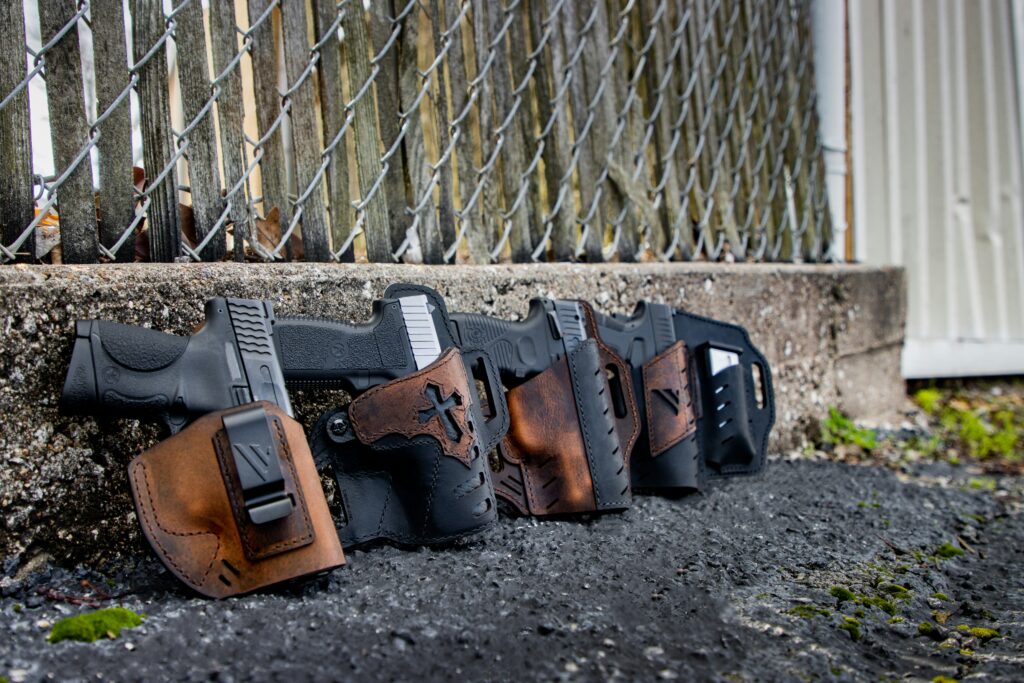
The Glock 19 is one of the most widely carried handguns in the country, which means the market for holsters built to fit it is enormous and, at times, overwhelming. Nylon and Kydex options dominate a lot of that market, but leather remains a strong choice for shooters who want a holster that molds to the gun over time, wears comfortably against the body, and holds up for years with basic care. Picking the right one isn’t just a matter of finding something labeled “Glock 19 compatible.” Fit, retention, carry position, comfort, and how the leather breaks in all affect whether a holster ends up in daily rotation or sitting in a drawer after a few uncomfortable weeks.
Getting the Fit Right for a Glock 19
A holster’s fit determines almost everything else about how it performs. Leather holsters are typically molded around the exact dimensions of a specific handgun model, so a holster built for a Glock 19 should hold the pistol securely without excessive movement, while still allowing a smooth draw without unnecessary friction. Because the Glock 19 shares frame dimensions closely with the Glock 23 and Glock 32, some holsters are cut to fit all three, but shooters running a Glock 19 with an optic, a weapon light, or an extended magazine base plate need to check that the specific holster accounts for those additions.
A well-fitted leather holster will typically have the trigger guard fully covered, a requirement for safe carry, with the molding tight enough around the trigger guard area that the gun doesn’t shift during normal movement like walking, sitting, or bending over. Loose fit isn’t just uncomfortable, it’s a safety issue, since a gun that can rotate or slide in the holster makes for an inconsistent draw and increases the odds of the trigger guard becoming exposed at the wrong moment. Buyers should also check whether the holster is molded specifically for the Glock 19 or listed as a generic compact-frame fit, since generic sizing tends to produce a looser, less secure result.
Retention and How It Affects the Draw
Retention refers to how well a holster keeps the handgun in place until the wearer intentionally draws it, and it comes in a few different forms depending on the holster’s design. Leather holsters generally rely on one or more of the following methods, sometimes combined:
- Friction retention, where the molded leather itself grips the pistol tightly enough to hold it in place without any mechanical lock, relying on tight tolerances built into the leather during molding.
- Thumb break retention, a leather strap that snaps over the back of the slide, adding a manual step the wearer has to release before drawing.
- Adjustable tension screws, small screws built into some holster designs that let the wearer tighten or loosen the fit over time as the leather breaks in or stretches.
For a leather glock 19 holster, friction retention alone is often sufficient for a well-molded, quality piece, particularly once the leather has broken in around the specific pistol. Shooters carrying in higher-activity environments, such as law enforcement work or situations involving physical exertion, often prefer the added security of a thumb break, even though it adds a fraction of a second to the draw. There’s a real tradeoff here between retention and draw speed, and the right balance depends more on how the holster will actually be used day to day than on any universal standard.
Carry Position Shapes the Right Holster Choice
Carry position has a major influence on which style of leather holster makes sense. Inside-the-waistband (IWB) holsters sit between the body and the pants, offering better concealment but requiring careful attention to comfort since the holster is pressed directly against the wearer for hours at a time. Outside-the-waistband (OWB) holsters ride on a belt outside the clothing, generally offering a faster, more natural draw and better airflow, at the cost of being harder to conceal under lighter clothing.
Beyond the basic IWB versus OWB choice, cant angle and ride height matter just as much for how a holster actually feels and functions. A forward cant, for example, tends to suit appendix or strong-side carry for a faster draw, while a more vertical or slightly rearward cant often works better for concealment under a jacket or open cover garment. Shoppers searching for a leather glock 19 holster should think through their typical daily clothing and activity level before settling on a carry position, since a holster that’s comfortable during a short test in a store can feel very different after a full day of sitting, driving, or moving around.
Comfort for All-Day Wear
Comfort is often underestimated during the buying process because a holster tends to feel fine for the first few minutes of wear, and problems only show up after extended use. Leather has a real advantage here over harder materials like Kydex, since it tends to conform to the body over time rather than maintaining rigid, unforgiving edges. That said, not all leather holsters are built with comfort in mind. Thicker leather can dig into the hip or ribs during IWB carry, and poorly finished edges can cause irritation through a shirt after several hours.
Features like reinforced mouth bands, rounded edges, and backing that distributes pressure across a wider area all contribute to comfort without sacrificing the structural rigidity needed to keep the holster’s shape for a clean re-holster. Belt clips, loops, or paddle attachments also affect how the holster sits and moves throughout the day, and shooters carrying IWB in particular should pay attention to how well the attachment method keeps the holster snug against the belt line rather than shifting or printing through clothing.
Break-In Period and Ongoing Care
Unlike Kydex, which holds its molded shape from the first use, leather holsters typically need a break-in period before they reach their ideal fit. New leather can feel stiff, and the draw may require more effort in the first few weeks than it will once the material has softened and adjusted to the exact contours of the pistol. Makers like Kirkpatrick Leather mold their holsters wet around the specific firearm, which helps shorten this adjustment period compared to holsters molded from dry leather, but some settling in through regular use is still normal.
Basic maintenance extends a leather holster’s life considerably. Keeping it away from prolonged moisture, applying leather conditioner periodically to prevent the material from drying out and cracking, and avoiding repeated exposure to direct sunlight all help preserve both the fit and the finish over years of carry. A holster that’s cared for properly should maintain consistent retention and comfort well beyond what a comparable synthetic option would offer, which is part of why leather remains a popular choice despite the upfront break-in period.
Final Analysis
Selecting a leather holster for a Glock 19 comes down to matching fit, retention, and carry position to actual daily needs rather than choosing based on appearance or brand alone. A holster molded specifically for the Glock 19, with retention suited to the wearer’s activity level and a carry position that holds up through a full day of movement, tends to outperform a generic option even if the generic version looks similar at first glance. Factoring in comfort features and understanding that a short break-in period is normal, rather than a sign of a poor fit, helps set realistic expectations and leads to a holster that stays in regular use rather than getting replaced after a few disappointing weeks.
 Jeremy W. serves as the creative heartbeat of the organization, specializing in the narrative depth that brings travel destinations to life. By meticulously curating cultural exploration guides and wanderlust highlights, Wren ensures that every piece of content transcends simple advice to become an immersive story. Their keen eye for detail allows travelers to visualize their journeys long before they arrive, transforming standard recommendations into a rich tapestry of global discovery.